
Attend to underlying patterns. Build new neural pathways. Discover the vital spark that has been lost.
Integrative Mental Health
We provide individual, couples, family, and group services. Combining efficiency with sensitivity to a person’s history and current needs leads to the best outcomes. Not everyone benefits from the same intervention or style of therapy, and you don’t need to be reduced to a diagnosis. Among our team, we have combined training in equine assisted psychotherapy, the neurosequential model of therapeutics, Eye Movement Desensitization and Reprocessing (EMDR), Acceptance and Commitment Therapy (ACT), contextual therapy, and emotionally focused therapy (EFT).
We understand that physical health and mental health are dependent on one another. This is why we also train in biofeedback, integrate trauma conscious yoga, or provide Safe and Sound Protocol for optimal physical regulation and balance. Clinically, we have a team that has extensive experience with Complex Post Traumatic Stress Disorder (C- PTSD), abuse recovery, attachment trauma and difficulties, eating disorders, nervous system regulation and performance optimization.

Psychotherapy
Individual Therapy
Individual therapy is often where we begin to unpack some things we’ve been carrying. Here, we address trauma (including developmental, acute and complex trauma), disordered eating, grief and loss, depression and anxiety, addiction and substance use or any defeating beliefs or behaviors that are getting in the way of living the lives that we want. You might incorporate talk therapy, EMDR, equine therapy, or stress management services into your individual plan.
EMDR
EMDR (Eye Movement Desensitization and Reprocessing) is a process that addresses distressing events and/or negative beliefs about ourselves and the world. There are many EMDR protocols developed for different things. Although it is most well known for trauma treatment, EMDR can be used to help people with addiction, eating disorders, anxiety, performance optimization, and other obstacles.
To learn more visit https://www.emdria.org/about-emdr-therapy/
Couples and Family Therapy
It takes two to tango, they say. Couples therapy with us will be insight-focused, contextual, practical, and emotionally safe. Models informing our practice include contextual family therapy, emotionally focused therapy, and the neurosequential model.
Family therapy can be incredibly helpful for the entire family system. Often times there is an “identified patient” in a family but the whole system can benefit from some work together. It can help an individual to have the family’s involvement in treatment. We offer insight-focused, contextual family therapy, and equine assisted psychotherapy for families.
Contextual Family Therapy
Contextual Family Therapy, developed by Ivan Boszormenyi‑Nagy, MD, is a relational model that looks across three generations to understand how patterns of loyalty, fairness, and connection shape a family’s wellbeing. It is an approach grounded in ethics and accountability, honoring each person’s perspective while recognizing the cultural, historical, and relational forces that influence family life. The model focuses not only on healing long‑standing relational injuries but also on strengthening the resources and resilience that already exist within the family system.
Contextual therapists work with compassion and clarity, addressing the issues that interfere with growth, trust, and development. The approach blends naturally with other family therapy traditions—including the work of Bowen, Satir, Whitaker, Minuchin, Hughes, and Monica McGoldrick’s contributions to genograms, life‑cycle understanding, and multicultural awareness. Many clinicians also integrate trauma‑responsive, somatic, and transpersonal methods within this framework. For children and adolescents, Contextual Family Therapy provides a strong structure for parent sessions and parent‑child relational work, helping families move toward fairness, connection, and sustainable change.
Although deeply compassionate, Contextual Family Therapy is also direct: it invites honest exploration of anything that interferes with a family member’s growth or wellbeing. Practitioners attend closely to fairness, accountability, and each person’s lived experience. The model blends well with other family therapy traditions, including the work of Bowen, Satir, Whitaker, Minuchin, Hughes, and the contributions of Monica McGoldrick in genograms, life‑cycle understanding, and cultural attunement. Many clinicians also integrate trauma‑responsive, somatic, and transpersonal approaches. For those working with children and adolescents, Contextual Family Therapy offers a powerful structure for parent sessions and parent‑child relational work.
Emotionally Focused Therapy (for Couples, Families, and Individuals)
EFT, created by Dr. Sue Johnson, supports people in making sense of their emotional world and how those emotions shape their patterns with others. Therapists help clients notice the cycles they get pulled into, name what they truly need, and respond in ways that create safety, connection, and trust. Over time, this builds steadier emotions and more secure relationships.
For more information on EFT: https://drsuejohnson.com/iceeft/


Equine Assisted Psychotherapy
Equine Assisted Psychotherapy is the ultimate experiential therapy. “Experiential” simply means to experience. It is one thing to talk about what we’re going to do; it’s a whole different embodied experience to do it in real time with your treatment team. People often say that with this work, they learn the following:
While practicing regulation skills and relationship skills with your equine partner, you are able to learn to feel more confident in your ability to connect. You are able to learn to feel like you can help your out-of-sync child regulate their nervous system. You can make requests and feel good about it. You can set boundaries. You are able to make choices and allow others to make choices, relinquishing control, and realizing when you’re being controlled and how to handle it. This can be facilitated in individual, couples, family, and group sessions.
For more information visit: https://naturallifemanship.com/
Stress Management
a.k.a. I don’t need therapy
Maybe you don’t feel that you need therapy, but you need something to help you cope and unload some pressure. You are a high achiever, or a busy parent, or caretaking an elderly parent, a grad student, or a resident. Or you’re experiencing a life change such as financial problems, a move, or a school or job change - whatever it is, you’re feeling the effects. Sleep changes, appetite changes, irritability, forgetfulness, muscle tension, headaches, digestion problems - all of these can be signs that stress is impacting you more than you’d like. These services can help.
Biofeedback
Biofeedback for Nervous System Regulation trains you to learn the power of regulating your own heart rate, skin conductance, muscle tension, and breath so that you can activate your parasympathetic nervous system. This is the part of your nervous system that allows you to rest and digest. Many of us go through the day without being in this state at all.
For more information visit: https://www.mayoclinic.org/tests-procedures/biofeedback/about/pac-20384664
Trauma Conscious Yoga
Yoga has too many benefits to name. Combining the sensitivity to trauma in the body along with the ancient wisdom of yoga, trauma conscious yoga can be a very powerful experience. Connecting to your body, moving for movement’s sake, and learning to trust your body takes patience and practice. Certified by the Trauma Conscious Yoga Institute and trained in Ayurveda, our facilitator offers 1:1 individualized sessions as well as occasional groups and workshops.
For information on the Trauma Conscious Yoga Method visit: https://traumaconsciousyoga.com/tcymethod/
SSP - Improve Vagal Tone and Nervous System Regulation
The Safe and Sound Protocol is based on the polyvagal theory. While listening to specific music, the Safe and Sound Protocol aims to help your parasympathetic nervous system become active with a felt sense of safety. Autonomic mapping teaching us to be more aware of whether we are in the state of ventral vagal, sympathetic, or dorsal vagal. We can become more attuned to these states and learn what to do. Certified by Unyte in the Safe and Sound Protocol, our clinician works 1:1 with you or with you and your child, and also helps you to be able to practice using the system at home.
Alma has a nice write up on SSP: https://helloalma.com/blog/before-trying-ssp/
For more information visit: https://www.whatisthessp.com/
Performance Optimization
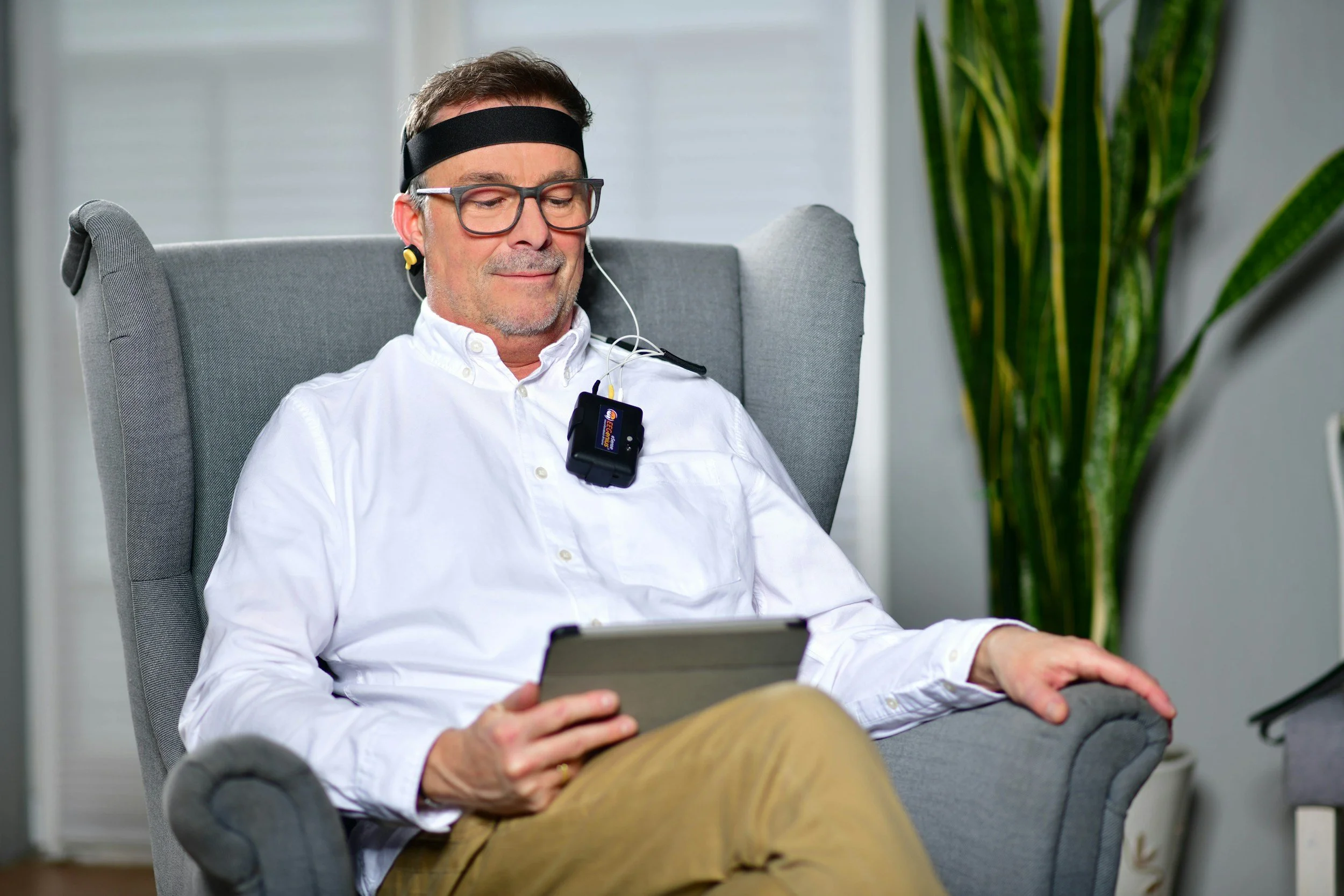
Performance may be directly tied to your success professionally, academically, or in a sport or creative performance, such as theatre. At times our ambition or emotion actually gets in the way of efficiency or feeling like we are doing everything we can to achieve the best outcome. Instead of engaging in unhealthy strategies, you can learn strategies to improve performance without negative consequences.
Biofeedback for Performance Optimization
Learning the power of regulating your own heart rate, skin conductance, muscle tension, and breath is not only good for you, it’s incredibly empowering. Managing critical moments and performing optimally is possible, whether you are in an airplane cockpit, on a playing field, in the board room, or in your busy household, this can help you perform or behave in a way you can be proud of. This is the work of biofeedback.
For more information: https://www.saybrook.edu/unbound/biofeedback-peak-performance/
EMDR for Performance Optimization
EMDR (Eye Movement Desensitization and Reprocessing) is most well known for trauma treatment. However, it can be incredibly powerful to help us overcome negative beliefs that we have about ourselves and help us to envision how we would like to be in future scenerios.
Group
Multiple topics are offered providing psychoeducation and support within the group setting. See the group therapy page for more details!